

Decluttering vs Organizing: The Critical Difference That Will Finally Transform Your Home
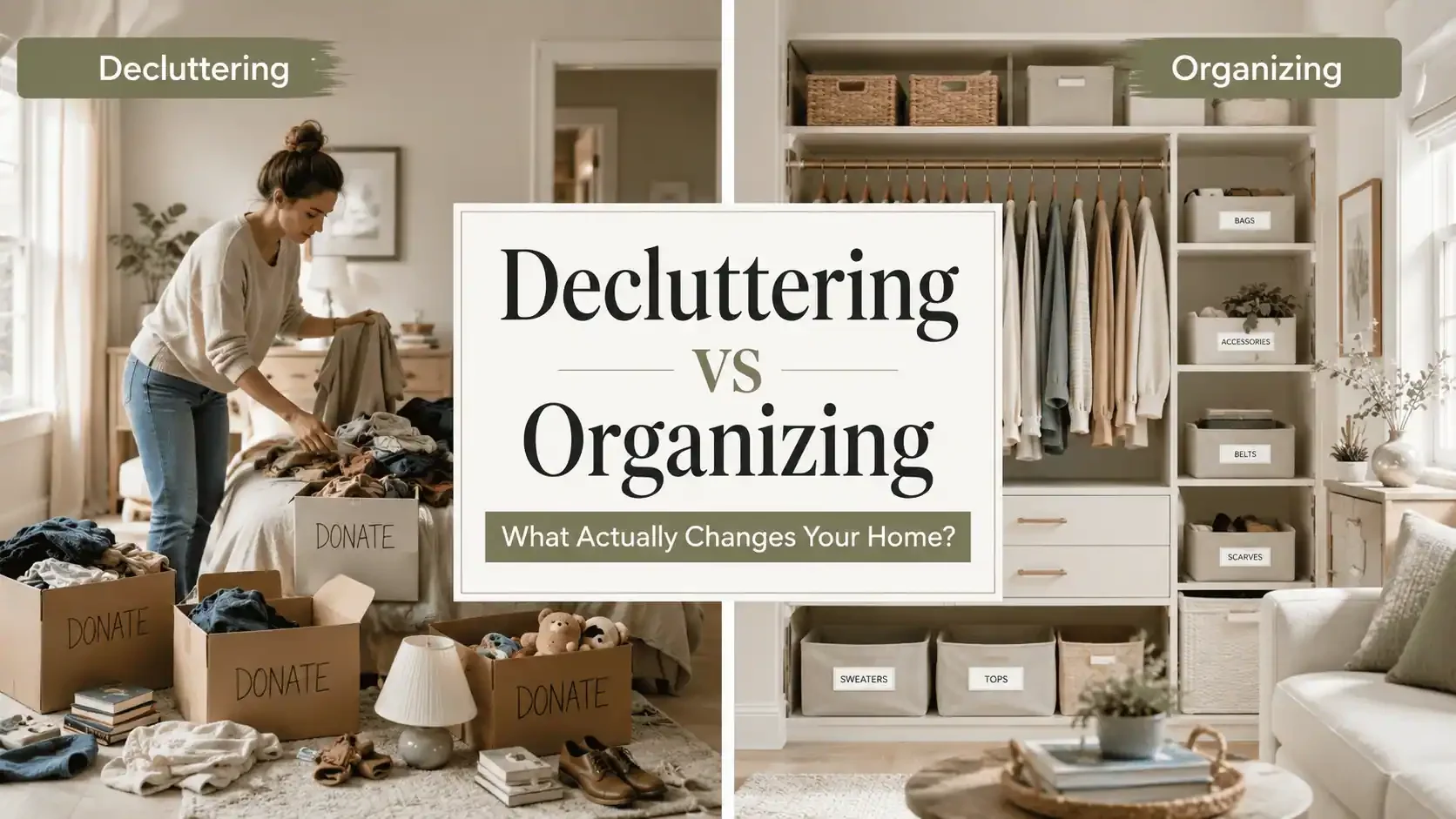
You've spent an entire Saturday reorganizing your kitchen cabinets. New bins, matching containers, color-coded labels everything looks great. But two weeks later? It's a mess again.
Sound familiar? You're not alone. Millions of homeowners make the same costly mistake every year: they organize before they declutter. The result is a beautifully arranged pile of things you don't actually need and a system that collapses under its own weight.
Understanding the difference between decluttering and organizing isn't just a technicality. It's the foundation of any home that stays functional, calm, and clutter-free for the long haul. Once you get this right, everything else falls into place.
What Is the Difference Between Decluttering and Organizing?
Decluttering is the process of removing items you no longer need, use, or love from your home. Organizing is creating a structured system for the items that remain. Decluttering reduces quantity; organizing improves placement and accessibility. You must always declutter first organizing clutter only creates the illusion of order.
What Is Decluttering?
At its core, decluttering is about making decisions. It's the intentional process of going through your belongings and asking a simple but powerful question: Does this item serve my life right now?
If the answer is no whether something is broken, redundant, outdated, or just taking up space it goes. That might mean donating it, selling it, recycling it, or throwing it away.
Common examples of decluttering include:
Clearing out expired pantry items
Donating clothes you haven't worn in over a year
Removing duplicate kitchen tools
Going through paperwork and shredding what's no longer needed
The emotional benefits run deeper than a tidier space. Research consistently shows that reducing clutter lowers cortisol levels (your body's primary stress hormone), improves focus, and creates a genuine sense of relief. There's a reason people describe decluttering as "a weight off their shoulders" because that's exactly what it feels like.
What Is Organizing?
Organizing is the art of creating efficient systems for the things you decide to keep. It's about assigning every item a logical, accessible home so your household can function smoothly day after day.
Good organization considers how you actually live not how a Pinterest board says you should live. It accounts for your routines, your household's habits, and the specific layout of your space.
Examples of organizing include:
Installing drawer dividers for utensils
Creating zones in your pantry (breakfast items, snacks, baking supplies)
Using labeled bins in a playroom by category
Setting up a command center near the front door for keys, mail, and bags
The goal isn't aesthetics alone (though a well-organized home does look beautiful). The real goal is home efficiency reducing the time you spend searching for things, reducing decision fatigue, and building a system that practically maintains itself.
Decluttering vs Organizing: Side-by-Side Comparison
|
Category |
Decluttering |
Organizing |
|
Definition |
Removing items you no longer need |
Creating systems for items you keep |
|
Goal |
Reduce quantity |
Improve placement & accessibility |
|
Process |
Sort, decide, remove |
Categorize, assign homes, label |
|
Outcome |
Fewer items in your space |
A functional, easy-to-maintain system |
|
When to Use |
First always |
After decluttering is complete |
Which Comes First Decluttering or Organizing?
Decluttering always comes first. No exceptions.
This is the most important rule in home organization, and it's the one most people skip. Here's why organizing without decluttering is a losing battle:
When you organize first, you're building a system around items you may not need. You buy storage containers for things that should have been donated. You create elaborate labels for duplicates. You dedicate real estate in your home to stuff that doesn't deserve it.
Then, predictably, the system breaks. Items overflow their designated spots because there are simply too many of them. Maintenance becomes a chore. You feel like you're failing at organizing when the real problem was that you never decluttered in the first place.
Why organizing doesn't work without decluttering:
You're solving a volume problem with a placement solution
More stuff requires more storage, which costs more money
Maintaining a complex system is exhausting
The root cause (excess) is never addressed
Declutter first. Then, and only then, build your organizing systems around what's left.
Why This Difference Matters More Than You Think
Getting the order right changes everything. Here's what's actually at stake:
Saves time. When you own less, you spend less time searching, cleaning, and managing your belongings. A study by the National Soap and Detergent Association found that eliminating clutter would reduce household cleaning time by up to 40%.
Reduces stress. A cluttered environment signals to your brain that there's unfinished work. Clearing it out even partially delivers immediate mental relief.
Improves home efficiency. Organized systems mean your household runs on autopilot. Kids know where backpacks go. Keys are always in the same spot. Mornings stop being chaos.
Prevents re-cluttering. When you understand why you accumulated clutter in the first place, you make more intentional purchasing decisions going forward. Decluttering is also a mindset shift.
How to Declutter and Organize Your Home: A Step-by-Step Guide
Step 1: Remove Unnecessary Items
Go room by room. Pick up every item and ask: Do I use this? Do I love this? Does this belong here?
Tip: Use a four-box method Keep, Donate, Trash, Relocate. Don't overthink it. If you've been holding onto something "just in case" for more than a year, it's time to let it go.
Step 2: Categorize What Remains
Once the excess is gone, group similar items together. All cleaning supplies in one place. All office supplies together. All seasonal items in one zone.
Tip: Doing this before you buy a single storage product prevents the classic mistake of buying containers that don't fit your actual needs.
Step 3: Create Smart, Sustainable Systems
Now you can organize. Assign a permanent home to every category based on how often you use it (daily items at eye level, rarely used items up high or in the back).
Tip: Keep systems simple. The more complicated a system, the harder it is to maintain especially with kids or multiple household members.
Step 4: Build Maintenance Habits
A one-time declutter won't last forever. Schedule a seasonal review (quarterly works well for most households) to reassess what's come in and what needs to go.
Tip: Adopt a one-in, one-out rule. Every new item that enters your home should replace something that leaves.
Professional Organizer in California: When DIY Isn't Enough
For many California families, finding the time let alone the energy to tackle years of accumulated clutter simply isn't realistic. Life is busy. The garage has been "on the list" for three years. The home office hasn't been functional since working from home began.
That's where a professional organizer makes all the difference.
At Restore Living CA, we specialize in helping homeowners across California move from overwhelmed to organized sustainably, practically, and without judgment. Whether you're dealing with a single cluttered room or a full home reset, our home organization services are designed around your life and your goals.
We don't just tidy things up. We help you build systems that actually last.
Signs It's Time to Hire a Professional Organizer
You've reorganized the same space multiple times with no lasting result
Clutter is causing tension in your household
You're preparing for a move, downsizing, or a new baby
You feel paralyzed and don't know where to start
You've tried every system you've found online and nothing sticks
If any of these sound familiar, home organization services near you can be one of the most valuable investments you make in your home and your peace of mind.
Ready to Finally Get Your Home Under Control?
You now know the difference between decluttering vs organizing and more importantly, why the order matters. The path to a clutter-free, stress-free home starts with letting go, then building something better in its place.
If you're ready to stop going in circles and start seeing real, lasting results, Restore Living CA is here to help. Our team of experienced professional organizers serves homeowners throughout California, bringing clarity, calm, and lasting systems to spaces of every size.
👉 Book your free consultation with Restore Living CA today and take the first step toward the home you actually want to live in.
Frequently Asked Questions
-
No. Decluttering removes items you no longer need; organizing creates systems for what remains. They are two distinct steps, and they must happen in the right order.
-
Yes, always. Organizing before decluttering wastes time and money. You'll build systems around items you don't need, and those systems will fall apart quickly.
-
Usually because there are simply too many items. No system can effectively manage excess. Decluttering first solves the root problem volume.
-
It depends on how much you own and how decisive you are. A single room can take 2–4 hours. A full home may take several weekends or a few days with professional help.
-
A professional organizer assesses your space, helps you make decluttering decisions, creates custom organizational systems, and teaches you how to maintain them long-term.
-
Technically, yes but it won't last. Without reducing the number of items, any system you create will be overwhelmed. The results will be temporary at best.
-
A full seasonal review (every 3–4 months) works well for most households. High-traffic areas like kitchens and closets may benefit from a quick monthly check-in.
