

How to Declutter Your Home Without Feeling Overwhelmed (Step-by-Step)
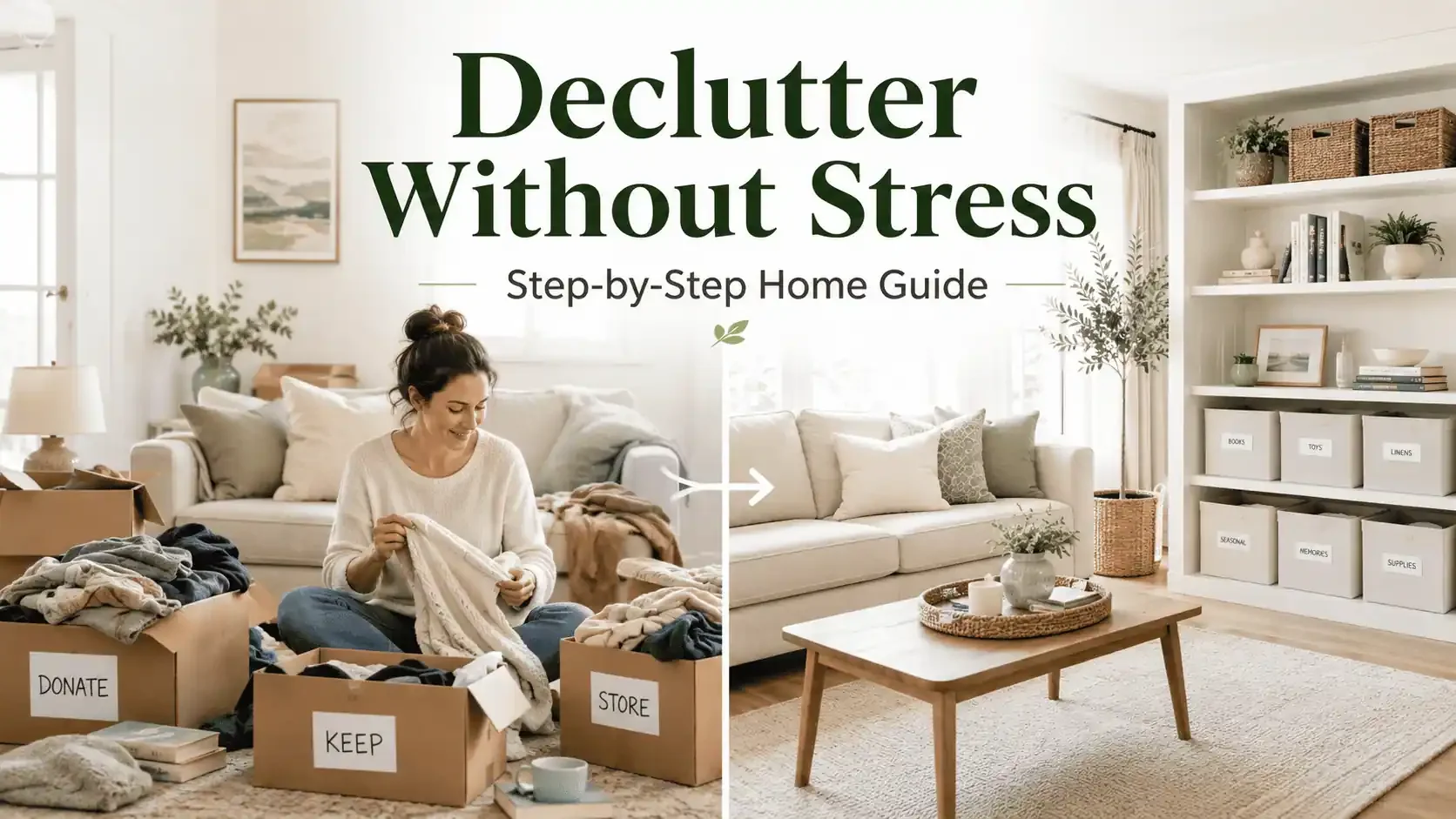
Does walking into a cluttered room make you want to close the door and walk away? You're not alone and you're definitely not lazy.
Clutter builds up slowly, quietly, until one day it feels like it's everywhere. The junk drawer overflows. The closet won't shut. The dining table has become a storage surface. And every time you think about tackling it, something in your brain says, "Not today."
That mental resistance is real. But here's the good news: you don't need a free weekend, a Pinterest-perfect closet system, or an endless supply of willpower to declutter your home. You just need a smarter approach and that's exactly what this guide gives you.
Why Decluttering Feels So Overwhelming
Before you can solve a problem, it helps to understand it.
Clutter isn't just a physical issue it's an emotional one. Every item you own carries a memory, a decision, or a feeling attached to it. That pile of clothes isn't just fabric; it's the guilt of money spent. That box in the garage isn't just "stuff" it's your grandmother's things you haven't had the heart to sort through.
On top of that, when a space is visually chaotic, your brain processes it as a never-ending to-do list. According to research in neuroscience and psychology, visual clutter competes for your attention and significantly raises cortisol (the stress hormone) levels. In other words, clutter doesn't just bother you it exhausts you.
The result? Procrastination disguised as perfectionism. You think, "I'll do it right when I have time to do it all." But that moment never comes, and the pile grows.
The fix isn't doing more. It's starting smaller.
How to Declutter Your Home Without Feeling Overwhelmed
Start with one small area a single drawer, shelf, or box and spend just 15 minutes on it. Sort items into three categories: Keep, Donate, or Discard. Work room by room, set realistic goals, and celebrate small wins. Consistency over perfection is the key to a clutter-free home.
Step-by-Step Decluttering System
Step 1: Start Small The One Area Rule
The biggest mistake people make is trying to declutter the entire house in one go. That's not a plan that's a recipe for burnout.
Instead, pick one small area to begin: a single drawer, the bathroom counter, or your nightstand. Finishing even one small space sends your brain a powerful signal: I can do this.
Actionable tip: Choose the area that bothers you most on a daily basis. Quick wins build momentum.
You don't have to fix everything today. You just have to start somewhere.
Step 2: Use the 15-Minute Method
Set a timer for 15 minutes and work only on decluttering until it goes off. That's it.
This technique removes the psychological pressure of a "big project." Fifteen minutes feels manageable for anyone even on your busiest days. Over time, those 15-minute sessions add up to a fully organized home.
Actionable tip: Schedule your 15-minute sessions the same time every day right after your morning coffee or before bed. Habit beats motivation every time.
Progress, not perfection, is what moves you forward.
Step 3: Follow the "Keep, Donate, Discard" Rule
Every item you touch goes into one of three categories:
Keep Used in the last 12 months and has a clear home
Donate Still in good condition but no longer serving you
Discard Broken, expired, or beyond saving
The key is making a decision and sticking with it. Don't create a "maybe" pile that pile becomes tomorrow's clutter.
Actionable tip: Keep donation bags near the door so items leave the house quickly. Out of sight, out of mind and out of your space.
Letting go of things you no longer need is an act of self-respect.
Step 4: Declutter Room by Room
Jumping between rooms creates chaos and confusion. Instead, focus on one room at a time and complete it fully before moving to the next.
A practical room-by-room order to reduce clutter efficiently:
Bathroom (smallest, easiest wins)
Bedroom (high daily impact)
Kitchen (most used space)
Living room
Home office
Garage / storage areas
Actionable tip: Take a "before" photo of each room. When you're tempted to quit, look at it. You'll be amazed by your progress.
Each room you finish is one less source of stress in your daily life.
Step 5: Set Realistic Goals
Expecting to declutter your house in a weekend after years of accumulation sets you up for failure and frustration.
A realistic timeline looks like this:
One drawer per day: 1–2 weeks to tackle a full room
One room per week: Full home decluttered in 1–3 months
15-minute daily sessions: Meaningful change within 30 days
Actionable tip: Write down your specific goal "I will declutter the kitchen pantry by [date]." Goals with deadlines happen. Goals without deadlines don't.
Small, consistent action always beats one overwhelming effort.
Step 6: Avoid Perfectionism
Perfectionism is the enemy of progress. You don't need to find the "perfect" organizer bins before you start. You don't need a fully designed system before you discard a single item.
Decluttering first, organizing second. You can't organize clutter you can only move it around.
Actionable tip: Give yourself permission to make imperfect decisions. Donate something and later wish you'd kept it? That's okay. The peace of a clutter-free home is worth more than the occasional second-guess.
Done is better than perfect always.
Step 7: Build Daily Habits
Decluttering is a one-time event. Staying organized is a daily practice.
Build these micro-habits into your routine:
One in, one out rule: Every new item that enters your home means one leaves
Reset rule: Spend 10 minutes each evening returning items to their designated place
Sunday sweep: Once a week, do a quick walk-through to catch clutter before it piles up
Actionable tip: Post a small sticky note on your front door as a reminder: "Does this need to come in?" It sounds simple because it is. And it works.
An organized home isn't a destination. It's a lifestyle.
Decluttering Checklist for Beginners
Use this checklist to guide your step-by-step decluttering process:
Kitchen
Expired food and spices
Duplicate utensils and gadgets
Mismatched containers without lids
Items not used in over a year
Bedroom
Clothes that don't fit or haven't been worn in 12 months
Old magazines and books
Items stored under the bed
Excess pillows or linens
Bathroom
Expired medications and beauty products
Old towels and washcloths
Duplicate or unused items under the sink
Living Areas
Old mail, papers, and junk mail
Broken or unused electronics
Toys, games, and decor no longer in use
Storage / Garage
Boxes that haven't been opened in 2+ years
Broken tools, old paint, outdated equipment
Holiday items no longer used
The Real Benefits of Decluttering Your Home
This isn't just about having a tidy space. Decluttering improves mental health in measurable, meaningful ways:
Mental clarity: A cleaner environment means a clearer mind. When your home is organized, you think more clearly and feel less mentally foggy.
Reduced stress and anxiety: Studies consistently show that people with organized homes report lower stress levels and better sleep quality.
Increased productivity: When you can find what you need quickly, you spend less time searching and more time doing.
Better space utilization: You may discover you have far more usable space than you realized no renovation required.
A sense of control: In a world full of uncertainty, having an organized home is something you can control. That feeling is powerful.
Embracing a minimalism lifestyle doesn't mean living with nothing it means living intentionally with things that genuinely serve your life.
Looking for Decluttering Help in California?
Sometimes the hardest part isn't knowing what to do it's actually doing it, especially when life is busy, emotional ties to belongings run deep, or the task simply feels too large to tackle alone.
That's where working with a professional organizer in California can make all the difference.
Restore Living CA serves homeowners across California with compassionate, judgment-free home organization services tailored to your life not a cookie-cutter system pulled from a magazine. Whether you're in the Bay Area, Los Angeles, Sacramento, or anywhere in between, their team brings expert decluttering help directly to you.
They don't just organize they help you build systems that last, so your home stays calm and functional long after the work is done.
👉 Explore Restore Living CA's Home Organization Services →
DIY Decluttering vs. Hiring a Professional Organizer
When DIY works well:
You have the time and motivation to work consistently
Your clutter is manageable and not emotionally complex
You're looking for a budget-friendly approach
When to hire a professional organizer:
You've tried multiple times and haven't made lasting progress
You're dealing with a major life transition (divorce, death, downsizing, moving)
Emotional attachment to items makes independent decisions feel impossible
You want efficient, expert guidance that delivers real results fast
A professional organizer doesn't just move things around they help you make decisions, create systems, and establish habits that stick. The investment often pays for itself in time saved, stress reduced, and a home that genuinely supports your well-being.
If you're searching for decluttering services near you in California, Restore Living CA offers free consultations to help you understand your options before committing to anything.
📞 Book a Free Consultation with Restore Living CA →
Frequently Asked Questions
-
Start with the smallest, most manageable space in your home a single drawer, shelf, or counter. Set a 15-minute timer and sort items into Keep, Donate, or Discard. Don't try to do everything at once. One small win creates momentum for the next.
-
It depends on the size of your home and how much clutter you have. A small apartment may take 2–4 weeks of consistent 15-minute daily sessions. A larger home with years of accumulated items can take 1–3 months. Working with a professional organizer can significantly cut that time.
-
Always declutter first, then clean. Cleaning around clutter is inefficient you'll just be moving piles from one place to another. Once the excess is removed, cleaning becomes faster and easier.
-
Yes, especially if you've struggled to make progress on your own. A professional organizer provides structure, accountability, and expertise that produces lasting results. For many people, the clarity and calm that comes with a truly organized home is priceless.
-
Focus on one category at a time (clothing, books, kitchen items) rather than one room at a time. Make quick, decisive choices if you haven't used it in a year and it doesn't bring you genuine value, let it go. For the fastest results, consider hiring a professional organizer who can help you work efficiently and decisively.
-
Yes. Research shows that visual clutter elevates stress hormones, disrupts focus, and contributes to feelings of anxiety and being overwhelmed. Clearing your space directly reduces that mental burden and can improve sleep, focus, and overall emotional well-being.
-
Absolutely. The 15-minute method was practically designed for busy families. Involve kids by making it a game who can fill a donation bag first? Small, consistent efforts work far better than waiting for a free weekend that never comes.
Ready to Finally Have the Home You Deserve?
You don't have to live surrounded by clutter. You don't have to wait until you "have time." And you don't have to do it alone.
Whether you tackle it yourself using this step-by-step guide or bring in expert decluttering help, the most important thing is to start even if it's just one drawer today.
Restore Living CA has helped hundreds of California homeowners transform their spaces and reclaim their peace of mind. Their team of experienced professional organizers is ready to meet you where you are without judgment, without pressure, and with genuine care for your home and your life.
